
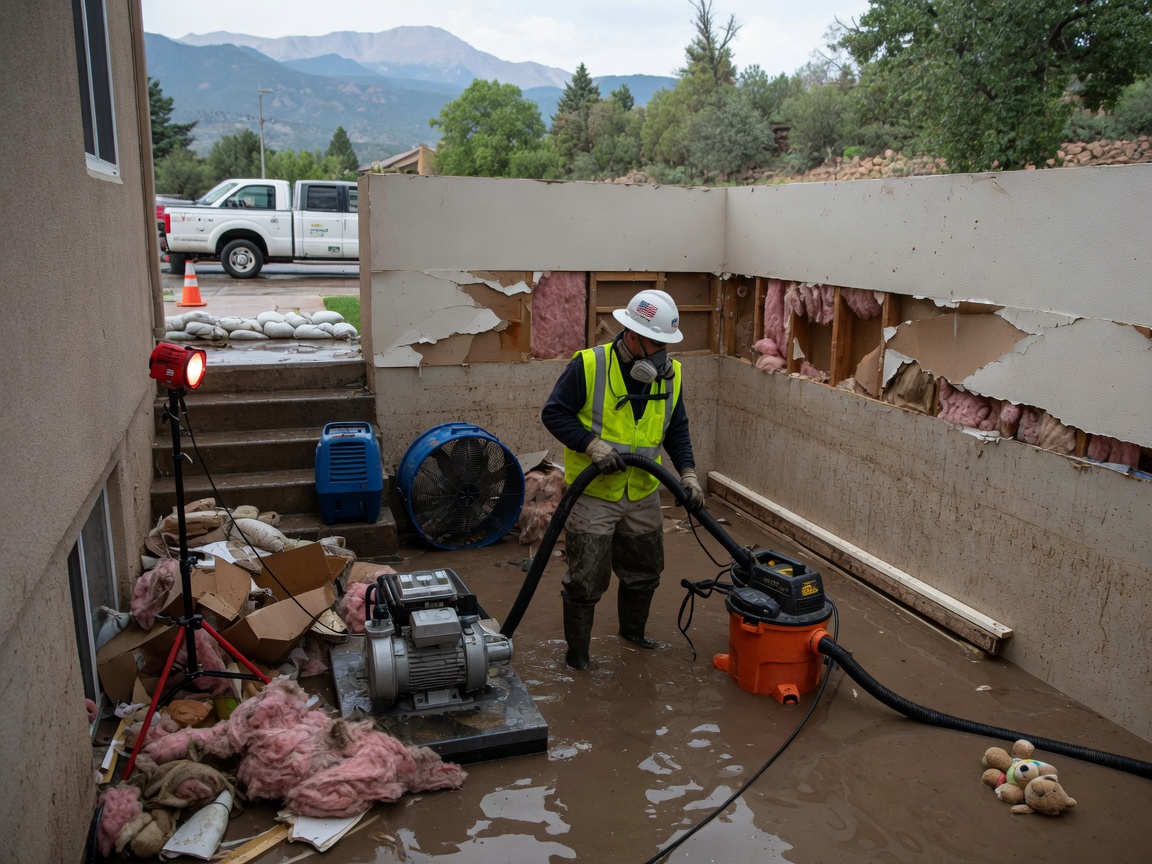
Flood damage cleanup in Colorado Springs requires more than removing visible water. Flooding can affect several rooms at once, move beneath flooring and into wall materials, and leave moisture in areas that are not immediately obvious.
The cleanup process begins with understanding where the water entered, how far it traveled and which materials were exposed. Standing water is addressed first, followed by drying and moisture monitoring. Materials are then evaluated to determine what can be cleaned and dried and what may require removal or repair.
Flood water can affect carpet, padding, drywall, baseboards, insulation, flooring and contents. The appropriate response depends on the type and amount of water, how long materials have remained wet and the condition of the affected property. Cleanup should therefore be based on an assessment rather than a one-size-fits-all checklist.
Drying is an important part of flood cleanup because removing visible water does not necessarily mean the property is dry. Moisture can remain below flooring, inside wall cavities or around structural materials. Monitoring affected areas helps determine when drying has progressed sufficiently for the next restoration step.
For a smaller or sudden water loss, emergency water extraction may be the appropriate starting point. When the extent of moisture is unclear, a water damage inspection can help identify affected areas before repair decisions are made.
Local properties, including homes around Stetson Hills, can have different floor plans, finished basements and material combinations. The cleanup plan should reflect those conditions and the actual path the water took through the property.
Homeowners who need complete [water damage restoration in Colorado Springs](/) may require several stages, including water removal, structural drying, cleanup, material evaluation and repairs. Addressing each stage in the right order helps keep the restoration work focused on the areas actually affected by the flood.
Technician insight
Flood cleanup should be based on the full water path rather than only the area where water is visible. Moisture can travel under flooring and into wall materials before obvious damage appears.
Basement Flood After Heavy Rain
After heavy rain, water can enter a basement or low area and spread across flooring before the source is obvious. A structured assessment helps determine where extraction, drying and material cleanup are needed.
Flood Damage Cleanup Services We Offer
✓Basement Flood Cleanup
Water removal and cleanup for flooded basement areas, including evaluation of affected flooring and wall materials.
✓Structural Drying and Dehumidification
Drying of affected walls, floors and other building materials after water removal.
✓Carpet and Pad Removal
Evaluation and removal of saturated carpet or padding when the materials cannot be appropriately restored.
✓Contents Cleaning and Pack-Out
Sorting, moving and cleaning salvageable contents from affected areas when needed.
✓Underfloor and Slab Drying
Targeted drying when moisture has moved beneath flooring or into areas around concrete slabs.
How it works
- 1
Flood Damage Assessment
The affected property is reviewed to identify the source, water path, affected rooms and materials that require immediate attention.
- 2
Water Removal & Cleanup
Standing water and heavily affected materials are addressed first to reduce continued exposure to moisture.
- 3
Structural Drying
Drying equipment is positioned according to the materials and areas affected, with moisture readings used to monitor progress.
- 4
Final Documentation & Repairs
Once drying is complete, remaining cleanup or repair needs are identified and documented.
Pricing
Flood cleanup costs vary based on water volume, affected square footage, materials and the drying time required.