A water damage inspection in Colorado Springs helps determine how far moisture has traveled after a leak, flood, plumbing failure, storm or other water event. Visible staining does not always show the full extent of the affected area, so an inspection looks beyond the first signs of damage.
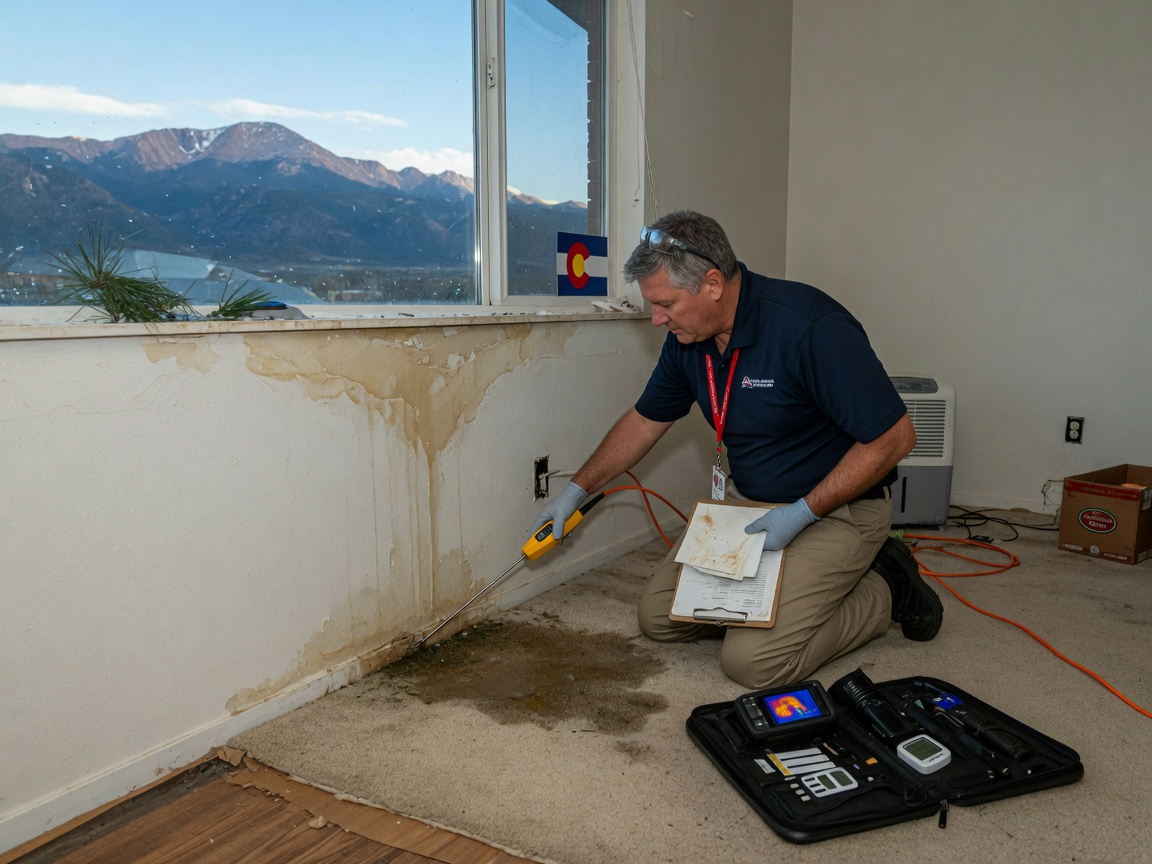
An inspection can begin with a walkthrough of the affected rooms, followed by moisture readings in materials that may have been exposed. Flooring, drywall, ceilings, baseboards and other surfaces can hold moisture even when they appear relatively normal from the outside.
Moisture readings are most useful when they are considered alongside the likely source and water path. A small plumbing leak, for example, may leave visible damage in one location while moisture has moved into adjacent flooring, a wall cavity or another concealed area.
Inspection findings can also help determine what should happen next. Some properties may need additional water extraction, while others may mainly require drying, cleanup or repair. If materials remain wet, identifying those areas early can help focus drying equipment where it is actually needed.
If active standing water is present, emergency water extraction should generally be addressed without unnecessary delay when conditions are safe. When several rooms are affected, flood damage cleanup may become part of the broader restoration plan.
Inspection needs can vary from one property to another, including homes in areas such as Broadmoor. Older finishes, finished basements, crawl spaces and different flooring systems can all affect where moisture may travel and how it should be evaluated.
For homeowners who need the broader process, [water damage restoration in Colorado Springs](/) can include assessment, water removal, drying, cleanup and repairs based on the inspection findings. The goal is to make restoration decisions from the condition of the property rather than visible staining alone.
Technician insight
An inspection is most useful when it answers two questions: where is the moisture now, and what materials may still need attention? That helps prevent repairs from being based only on visible staining.
Hidden Moisture After a Plumbing Leak
A small plumbing leak can leave staining in one area while moisture has moved farther into flooring or adjacent materials. A structured inspection helps locate the affected areas before deciding what needs to be dried or repaired.
Water Damage Inspection Services We Offer
✓Moisture Mapping
Moisture readings across affected walls, floors and ceilings to identify areas that may need additional drying.
✓Thermal Imaging Assessment
Thermal imaging can help identify temperature differences that may indicate areas requiring closer moisture inspection.
✓Crawl Space Inspection
Inspection of accessible crawl-space areas for moisture and conditions associated with water intrusion.
✓Slab Leak Assessment
Evaluation of signs that moisture may be present beneath or around concrete slab areas.
✓Post-Storm Water Inspection
Inspection after heavy rain or storm-related water intrusion to document affected areas and likely entry points.
How it works
- 1
Property Walkthrough
The affected rooms and visible signs of water intrusion are reviewed before detailed readings are taken.
- 2
Moisture Readings
Moisture meters and other appropriate inspection methods are used to identify areas that may require drying or further evaluation.
- 3
Source & Water-Path Review
Likely entry points and the path of water are considered to determine whether hidden areas may also be affected.
- 4
Findings & Next Steps
The findings are organized into practical next steps, such as extraction, drying, cleanup or repair where appropriate.
Pricing
Inspection requirements vary by property size, number of affected areas and whether hidden or difficult-to-access spaces need evaluation.