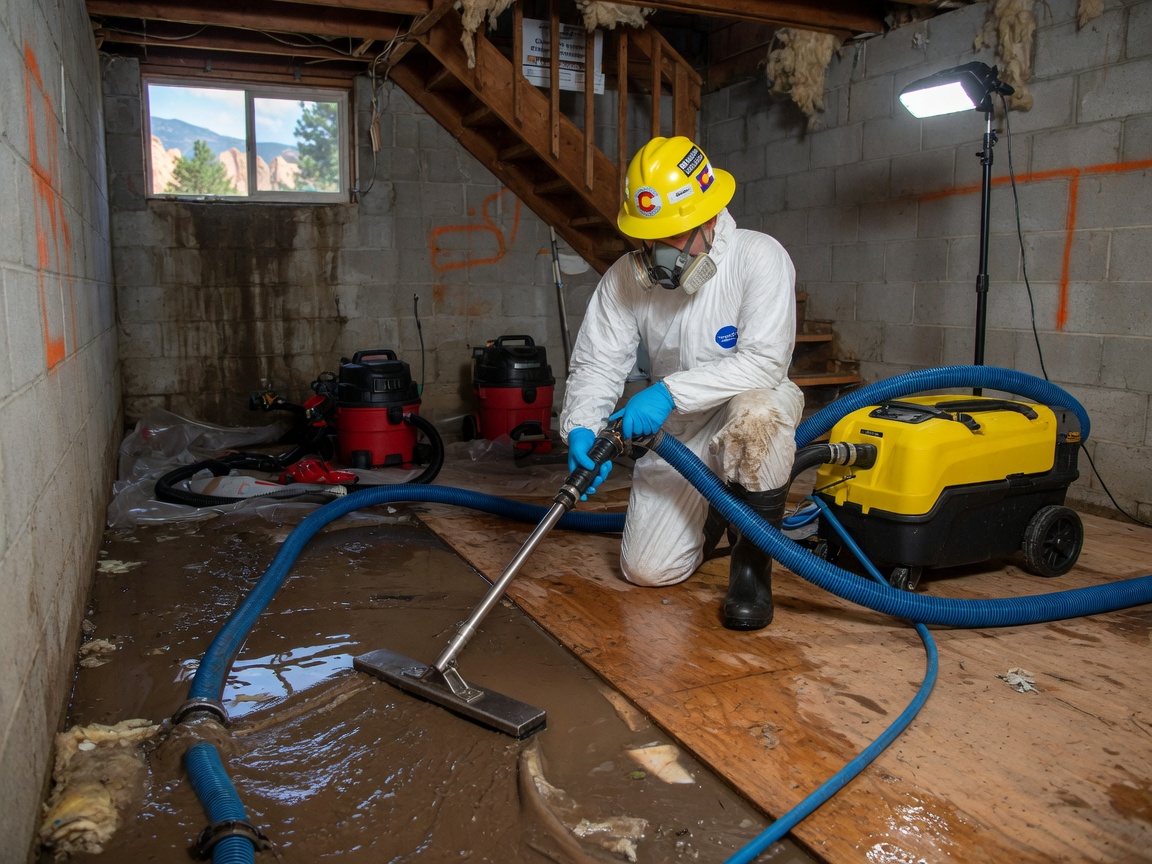
Emergency water extraction in Colorado Springs starts with removing standing water before it can continue spreading into flooring, drywall, insulation, contents and other building materials. The first step is to identify the likely source, assess the affected areas and determine how far the water has traveled.
Water can move beyond the visible puddle. It may collect under flooring, around baseboards, inside wall cavities, beneath carpet or in crawl spaces. That is why extraction should be followed by drying and moisture checks rather than treating only the area where water is easiest to see.
For a sudden pipe break, appliance leak or plumbing failure, the immediate goal is to stop or control the source when it is safe to do so and remove accessible standing water. Extraction methods depend on the amount of water, the affected materials and whether the water is confined to one area or has spread into multiple rooms.
After bulk water removal, affected materials need time and the right conditions to dry. Air movement, dehumidification and moisture monitoring can help determine whether flooring, drywall and other materials are continuing to hold moisture. This is especially important when water has moved beneath surfaces or into less visible areas.
When flooding affects several rooms or leaves substantial moisture behind, flood damage cleanup may be needed in addition to extraction. If the extent of the moisture is uncertain, a water damage inspection can help identify areas that need closer evaluation.
Properties in neighborhoods such as Briargate may have different layouts and building materials, so the restoration approach should be based on the actual affected areas rather than a fixed procedure. The same principle applies to homes, rental properties and commercial spaces.
If you need broader [water damage restoration in Colorado Springs](/), extraction can be the first part of a larger process that includes drying, cleanup, material evaluation and repairs. The work should progress according to moisture conditions and the extent of the loss.
Technician insight
The visible water is not always the full problem. Moisture can move under flooring or behind baseboards, so extraction and drying decisions should be based on the affected materials and moisture readings.
Water Extraction After a Pipe Break
A sudden plumbing failure can leave standing water across a room before the source is isolated. Extraction removes the bulk water first, followed by targeted drying and moisture checks to determine whether flooring, drywall or other materials need additional restoration.
Emergency Water Extraction Services We Offer
✓Basement Water Extraction
Removal of standing water from finished or unfinished basement areas after leaks, pipe breaks or flooding.
✓Crawlspace Water Removal
Extraction of water that has collected in crawl spaces or other hard-to-access areas.
✓Carpet and Pad Extraction
Removal of water from affected carpet and padding when the materials can be appropriately dried and restored.
✓Appliance Leak Extraction
Water removal after sudden leaks from washing machines, dishwashers, water heaters or other appliances.
✓Commercial Water Extraction
Standing-water removal for commercial properties affected by plumbing leaks, equipment failures or flooding.
How it works
- 1
Water Source & Damage Assessment
We identify the likely source, check affected rooms and determine where standing water or moisture has spread.
- 2
Standing Water Removal
Pumps and extraction equipment are used to remove accessible standing water while limiting unnecessary disturbance to unaffected areas.
- 3
Drying & Moisture Monitoring
Air movers and dehumidification are positioned where needed, with moisture checks used to track drying progress.
- 4
Final Moisture Check
Affected materials are checked again before equipment is removed and the next restoration or repair step begins.
Pricing
Pricing depends on water volume, affected areas, materials, access and the amount of drying required.